From the Blog
How to Choose the Right Hairbrush for Your Hair and Routine

Finding the right hairbrush starts with thinking about what you actually use it for. Whether you’re detangling, smoothing, blow-drying, styling or simply giving your hair a quick brush, the best tool is the one that suits your routine.
Consider whether you usually brush your hair when it’s wet, damp or dry, then check that the brush you choose is designed for that stage. Your hair length, thickness and preferred styling technique can also influence which brush feels most comfortable and effective.
A flexible detangling brush or wide-tooth comb can be useful for working through knots, while a paddle or cushion brush is well suited to everyday brushing and smoothing. If you regularly blow-dry your hair, a vented brush can help with airflow, while a round brush is ideal for creating shape and movement around a barrel.
For more detailed styling, a tail comb, edge brush or compact styling brush can help with parting and finishing touches.
You don’t need one hairbrush to do everything. In fact, keeping your routine simple with one brush for detangling and another for styling can often be more practical than trying to make a single tool work for every job.
Detangling brushes
A good detangling brush can make working through knots feel much easier, particularly when you take your time and work in manageable sections. Flexible pins or a flexible brush body can move with the hair, helping you work through tangles without unnecessary pulling.
Start at the ends and gradually work your way upwards. If a knot feels stubborn, pause, make the section smaller and use shorter, gentler strokes. More force isn’t the answer when it comes to detangling hair.
Always check whether your chosen brush is suitable for wet, damp or dry hair, as flexibility alone doesn’t mean it’s designed for every stage of your routine.
The Brushworks Professional Oval Detangling Hair Brush in Pink is one current option to consider. Check the product instructions for the recommended way to use it.
Paddle and cushion brushes
A paddle brush has a wider, flatter shape, making it useful for everyday brushing, smoothing and working through larger sections of hair. A cushion brush has a softer base that allows the pins to respond differently as you brush.
When choosing a paddle or cushion brush, consider the brush width, pin spacing, material, cushion and handle. A wider brush can cover more hair at once, while a narrower design may give you greater control around shorter layers or smaller sections.
The Brushworks Blow Dry Paddle Brush is one option to consider and can be used for a different purpose to a dedicated detangling brush. If you plan to use it with a hairdryer, always check the product’s heat-use instructions first.
Vented brushes
A vented hairbrush features openings through the brush body, allowing airflow from a hairdryer to pass through the hair. This makes it a useful option for blow-drying when you want to guide and smooth the hair without wrapping it around a barrel.
However, “vented” doesn’t automatically mean a brush is suitable for heat styling. Always check the product instructions, use manageable sections and keep the hairdryer moving rather than concentrating heat in one area.
Round brushes
A round hairbrush can create shape, lift and movement during a blow-dry. Smaller barrels create a tighter bend, while larger barrels give softer, wider movement.
Choose your round brush size based on your hair length and the finish you want. Start with manageable sections and avoid wrapping the hair too tightly so the brush can be released easily.
The Brushworks Ceramic Round Brush in Medium is one current option to consider. Always check the product details before use.
Combs and detail tools
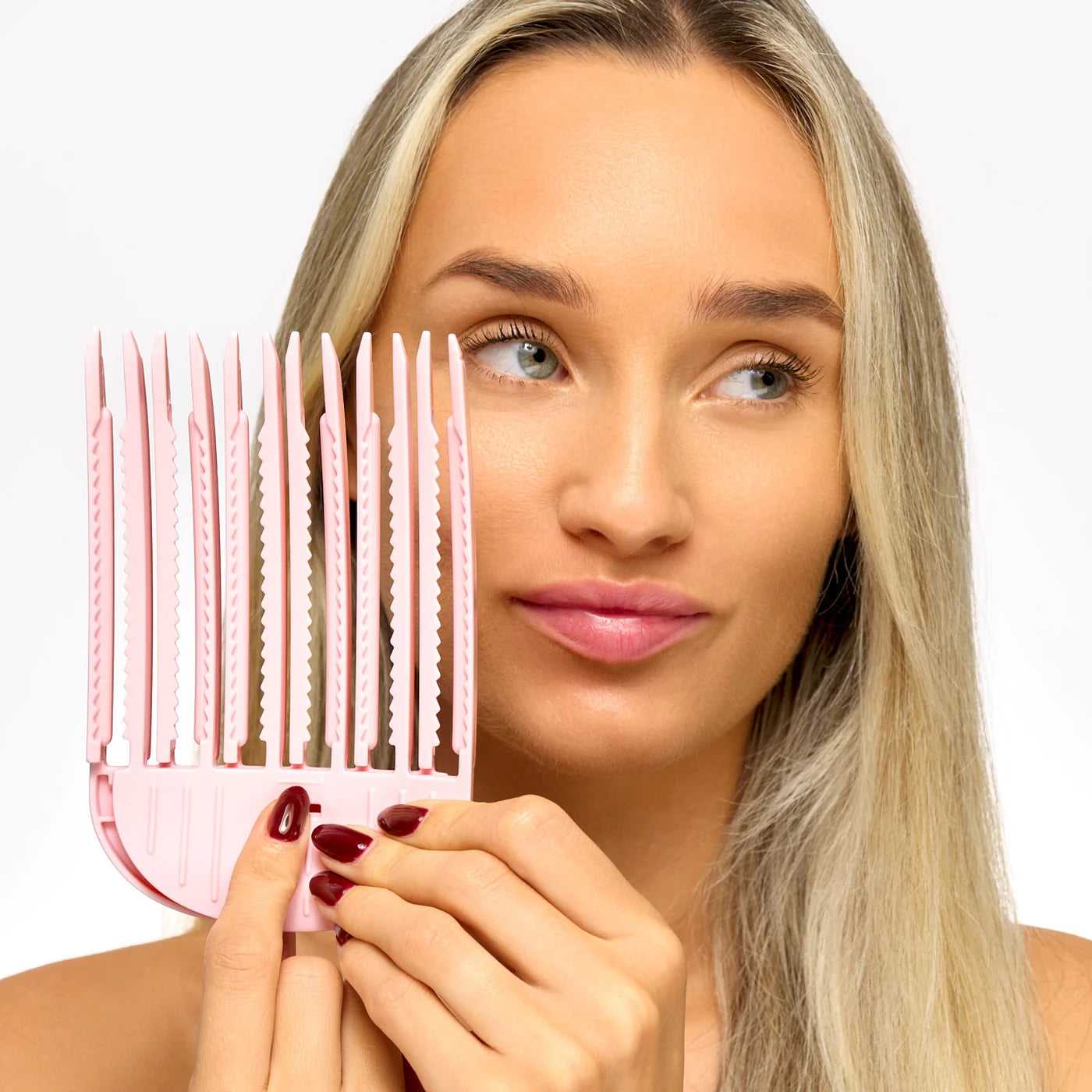
Combs and detail tools can be just as useful as a hairbrush, depending on what you’re trying to achieve. A wide-tooth comb is great for separating larger sections, while a tail comb helps create clean parts and neat sections. A compact comb can be handy for travel, and a finishing comb or edge tool gives you more control around smaller areas.
Choose the tooth spacing based on the job. A fine-tooth comb isn’t necessarily the best choice for working through larger tangles, and a tail comb should be used for parting rather than pulling through knots.
Choose by routine, not hairbrush labels
Finding the right hairbrush is much easier when you start with your routine rather than searching for one brush that does everything.
- Think about when you brush. Before washing, after washing, during drying, before styling or for finishing.
- Decide what you need to do. Detangle, smooth, dry, shape, section or finish.
- Check your hairs condition. Wet, damp or dry use must be approved for the exact tool.
- Compare the details. Width, pin or tooth spacing, handle, barrel and storage.
- Keep your collection simple. Choose a selection of tools that covers your routine.
The best hairbrush for your routine will always depend on what you need it to do. Choosing by task rather than the label on the brush makes it easier to find tools that genuinely work for you.
Choose by hair length and section size
Your hair length can influence which brush feels easiest to use, but it’s not the only factor. The size of the section you’re working with and the style you want to create matter too.
- A compact head can give control around short sections and detail.
- A medium head can is versatile option for everyday brushing and moderate size sections.
- A broad paddle can guide larger sections, particularly when working with longer hair.
- A small round barrel creates a tighter shape and can be easier to control on shorter sections.
- A large round barrel creates a softer, wider curve but needs enough hair length to wrap around comfortably.
Density matters in a similar way. Smaller sections usually make a dense amount of hair easier to control. Instead of reaching for a stronger pull, reduce the section size.
A simple two-tool system
You don’t need a bathroom full of hairbrushes and combs to create a good haircare routine. For many people, a simple two-tool system can cover most everyday needs.
Tool one: detangle. Choose a brush or comb that’s suitable for the stage when you usually remove knots, whether that’s on wet, damp or dry hair.
Tool two: style or finish. Choose a paddle, vented, round or detail brush depending on the look you regularly create.
Test a new hairbrush properly
A new hairbrush can take a little time to get used to, so test it as part of your normal routine rather than judging it after one rushed use.:
- Read the tool and styling-product instructions.
- Use your usual hair condition and section size.
- Note where the brush moves smoothly and where it catches.
- Check whether the width and handle give you control.
- Record how easy it is to remove shed hair and clean residue.
- Compare it with the tool it is intended to replace.
The best hairbrush for your routine should make a regular task feel easier, smoother or more controlled. Looks alone aren’t enough.
Cleaning and storage
Remove shed hair regularly without pulling or damaging the pins and bristles, then clean your brush according to the care instructions. Allow it to dry completely before storing and keep the brush head protected from being crushed.
Check regularly for bent, sharp, loose or damaged parts. If you’re travelling with your hairbrush, keep it clean and dry and use a case or bag that protects the brush head.
Common mistakes
- Choosing by hair type label without defining the job
- Using an unverified brush on wet hair or with heat
- Starting a detangling pass at the roots and pulling to the ends
- Loading too much hair onto a round brush
- Treating a broad paddle as a precision tool
- Pulling a tail comb through resistance
- Ignoring cleaning, damaged pins or trapped shed hair
- Buying a large set before knowing which shapes are useful
Frequently asked questions
Can I use the same brush on wet and dry hair?+
Only when the exact product instructions support both uses. Wet-use suitability should be confirmed, not inferred from appearance.
Is a paddle brush a detangling brush?+
Some products may support both jobs, but the names are not interchangeable. Check pin design, flexibility and directions.
What size round brush should I choose?+
Consider hair length, section size, desired bend and your control. Smaller barrels work with smaller sections; larger barrels create a broader curve.
How many hairbrushes do I need?+
Enough to cover your repeated detangling, drying and styling jobs without unnecessary overlap. Two well-chosen tools are often a sensible start.
Does thicker hair need a bigger brush?+
Not automatically. A larger head covers more area, but smaller sections may give more control. Compare section size, pin spacing and tool instructions.
Continue your routine
Related Brushworks guides

Should You Detangle Hair Wet or Dry? Choosing the Right Tool
Whether you should detangle hair wet or dry depends on your hair routine, the products you use and the brush...
Read guide →
Blow-Dry Brush Guide: Paddle, Vented and Round Brushes
Choosing the right blow-dry brush comes down to the style and finish you want to create. Different brush shapes work...
Read guide →Shop the guide
Recommended products
-
Brushworks Professional Oval Detangling Hair Brush - Pink Pink Oval Detangling Brush View Product: Professional Oval Detangling Hair Brush - PinkProfessional Oval Detangling Hair Brush - PinkSold out
-
Brushworks Blow Dry Paddle Brush Blow Dry Paddle Brush View Product: Blow Dry Paddle BrushBlow Dry Paddle Brush£7.99
-
Brushworks Ceramic Round Brush - Medium Medium Ceramic Round Brush View Product: Ceramic Round Brush - MediumCeramic Round Brush - Medium£6.99
-
Brushworks Flexi Oval Detangling Hair Brush Flexi Detangling Brush View Product: Flexi Oval Detangling Hair BrushFlexi Oval Detangling Hair Brush£8.99
-
Brushworks Professional Quick Blow Dry Hair Brush Quick Blow-Dry Brush View Product: Professional Quick Blow Dry Hair BrushProfessional Quick Blow Dry Hair BrushSold out
-
Brushworks Scalp Detox Comb Scalp Detox Comb View Product: Scalp Detox CombScalp Detox Comb£4.99
-
Brushworks Vented Paddle Blow Dry Hair Brush Vented Paddle Brush View Product: Vented Paddle Blow Dry Hair BrushVented Paddle Blow Dry Hair Brush£7.99
-
Brushworks Curly Hair Detangling Brush Curly Hair Brush View Product: Curly Hair Detangling BrushCurly Hair Detangling Brush£8.99